Every important conversation you’ve ever had is lost somewhere.
In a WhatsApp thread you’ll never scroll back to. In an email
chain where nobody remembers the final decision. In a group chat
that mixed the renovation budget with birthday memes.
This isn’t a new problem. But nobody has solved it at the
protocol level.
That’s what SMARD is.
SMARD is an open protocol for structured communication capsules.
A Smard is not a message. Not an email. Not a chat thread.
It’s a room — convened for something specific, with a name,
with participants, with everything related to that topic in one
place. Forever.
The bathroom renovation with your contractor. The weekend trip
your family is planning. The quote you’re waiting on. The
invoice you need to find six months from now.
Each one lives in its own capsule. Titled. Structured.
Never lost.
The anatomy of a Smard
Every capsule has:
— A title. Always. If you forget to write one, the system
suggests it from your content.
— A body. Up to 3,000 characters. Enough for any real
communication. Too short to become a document.
— Participants. A flat list of @handles. No admins. No roles.
If you received it, you participate equally.
— Messages. Everything said about this topic lives here.
No parallel threads. No lost context.
— Sparks. Micro-reactions up to 16 characters.
👍 done ✅ confirmed on my way
For when you don’t need a reply — just a signal.
— Whispers. A private message inside a shared capsule,
visible only to one participant. The group knows it exists.
Nobody else can read it.
— Files. All attachments live in a dedicated area at the top
of the capsule — not buried in the message thread.
— Tasks. Checkable items inside the capsule, visible in a
global tasks view across all your Smards.
Four capsule types:
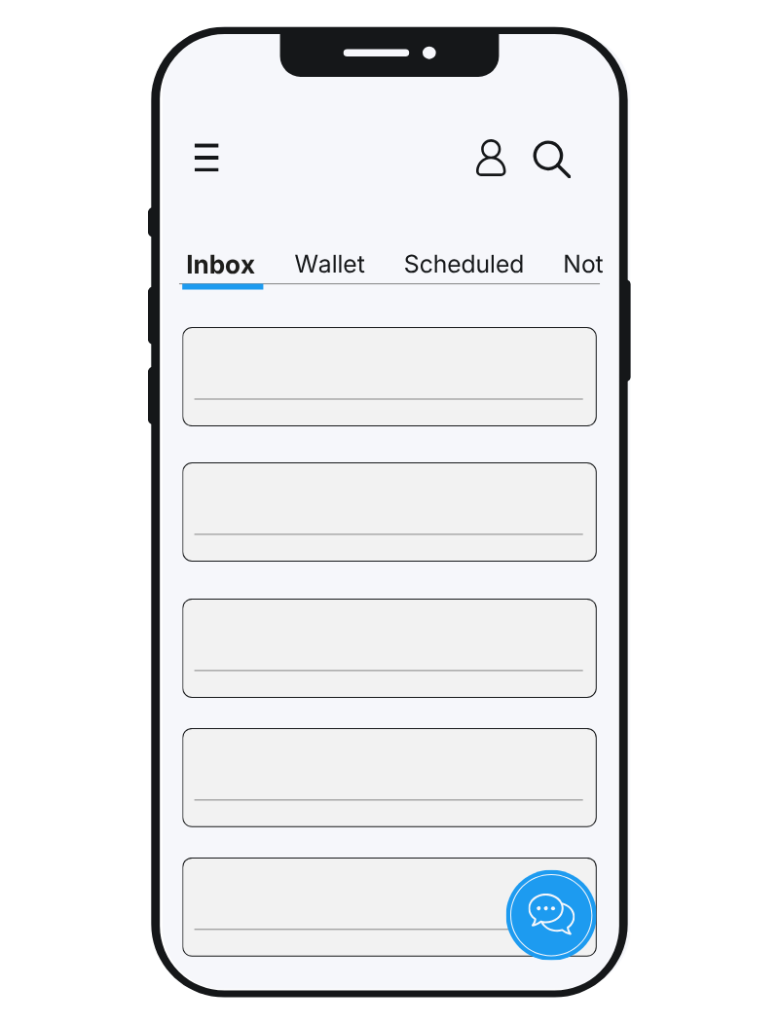
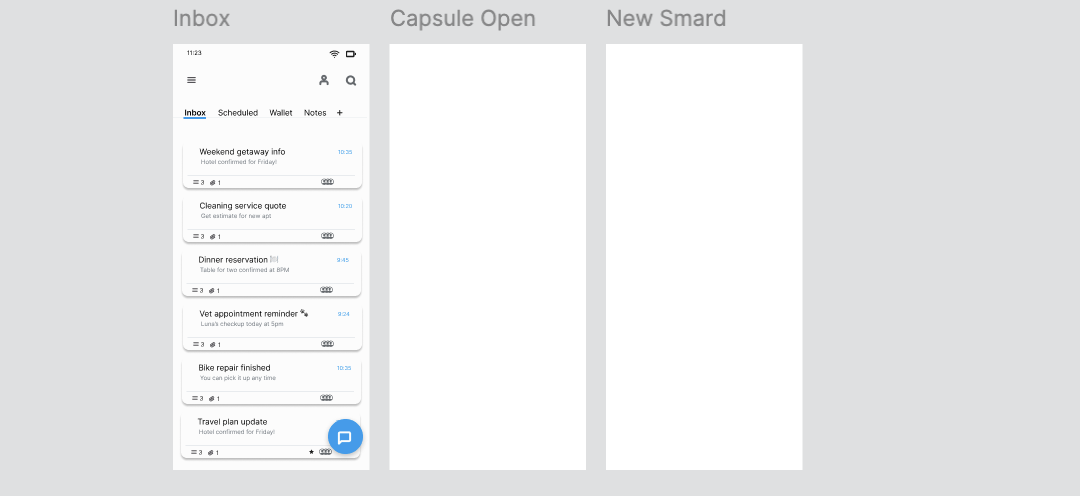
Inbox — communication between participants on a topic
Note — private, yours alone. A Smard you write to yourself.
Scheduled — any Smard with a date and time attached
Wallet — documents of value: invoices, tickets, contracts
Built for humans. Designed for what’s next.
Here’s something we decided early: SMARD has no AI in the
base protocol. Ever.
Not because AI isn’t useful — but because a communication
standard needs to be simple, stable, and owned by nobody.
The moment you put AI in the foundation, you create a
dependency on a company, a model, a pricing decision.
But we did design SMARD to be natively readable by AI agents
without additional instructions.
The JSON structure of a Smard — title, body, participants,
messages, tasks — gives any LLM enough semantic context to
understand what happened, who was involved, and what might
need to happen next.
When AI agents start acting on our behalf — buying things,
scheduling appointments, negotiating with suppliers — they
need somewhere to record what they did. Right now that
context lives nowhere. It disappears into API calls and
unstructured logs.
A Smard is the natural container for that record.
The protocol doesn’t change. The agent just writes to it.
Why open source
A communication standard cannot belong to a company.
Email works because nobody owns SMTP. The web works because
nobody owns HTTP. If SMARD is going to become the way people
communicate structured context — between humans today, between
agents tomorrow — it has to be owned by everyone.
Apache 2.0. Build on it. Use it commercially. Extend it.
The only requirement: keep the protocol open.
SmardApp is the open-source reference client — the simplest
possible implementation of the protocol. Free forever.
No monetization. No tracking. No data mining.
Where we are
The capsule specification is complete and published.
SmardApp is in design phase.
The reference client hasn’t been built yet.
This is exactly the right moment to get involved — the
decisions made now define the standard.
Spec: github.com/smard-protocol/smard
Web: smardapp.com
If you’re a developer who wants to help build the reference
client, or a designer, or someone who just thinks this
problem is worth solving — open an Issue on GitHub or
sign up for updates at smardapp.com.
We’re building this in public. Every decision is on GitHub.
Every conversation is a Smard.
— The SMARD Protocol team